
- Process per geometry: milling for prismatic, turning for round, mill-turn for mixed, grinding for ±0.002 mm.
- over a hundred machines from Mazak, Brother, Citizen, Star, Tsugami in 6,800 m².
- ±0.002 mm (turning) / ±0.003 mm (milling) tolerance, Ppk ≥ 1.67 initial, verified on Hexagon CMMs.
- MOQ 1 piece, lead times 3 / 7 / 30 days.
How does the manufacturer match material to process?
The match starts with geometry, then material. Milling owns prismatic parts — housings, brackets, manifolds. Turning owns round parts — shafts, pins, bushings. Mill-turn owns parts that are mostly round but carry flats or cross-holes. Grinding finishes the dimensions a material's machinability cannot reach alone. The material's machinability then drives feeds, speeds, and insert choice on whichever process runs it.
How does the material list drive the process match?
Each material family cuts differently, so each gets matched to a process and a speed. The manufacturer verifies every incoming lot by XRF before it reaches a spindle, so the match starts from the actual alloy, not a guess.
| Material family | Grades run | Process match |
|---|---|---|
| Aluminum | 6061, 6063, 6082, 7075, 2014 | Fast turning/milling; anodizes well |
| Stainless steel | 303, 304, 316, 316L, 17-4PH | 303 free-machining; 316/17-4PH slower |
| Carbon / alloy steel | 1018, 1045, 4140, 4340, 12L14 | Carburizing or nitriding for wear parts |
| Brass / copper | C360, H62, C110 | Sharp tools for gummy copper |
| Titanium | TA2, TC4 (Grade 2 / 5) | Rigid machines, slow feeds; stress relief outsourced |
| Plastics | ABS, POM, nylon, PTFE, PEEK | Sharp positive-rake tools, low heat |
How does the tolerance match the material's machinability?
Tolerance and machinability are linked: a free-machining grade holds ±0.002 mm (turning) / ±0.003 mm (milling) without drama, while a gummy alloy drifts as heat builds. This manufacturer holds ±0.003 mm on CNC milling, ±0.002 mm on CNC turning and ±0.002 mm on grinding, verified on Hexagon CMMs with Ppk ≥ 1.67 at the initial study on key characteristics and Cpk ≥ 1.33 on general characteristics. Capability is reported per characteristic: every report names the feature, its tolerance band, the sample size, the sigma method, and the study window. The tolerance you can hold depends on the material you chose, which is why the two decisions are made together.
your move is to ask for the evidence behind that tolerance. A CMM report proves one part; an SPC chart proves the run. When a manufacturer can show Ppk ≥ 1.67 initial on the dimension you care about, the ±0.002 mm (turning) / ±0.003 mm (milling) is a repeatable fact, not a single lucky measurement. If the answer is one measurement with no chart, treat the tolerance as unproven.
How does titanium change the process match?

Titanium is the material that punishes a mismatch. It conducts heat poorly, so the temperature stays in the cut and wears the insert; it also springs back after cutting. The match is rigid machines, sharp tools, and slower feeds, and a hard limit stated plainly: stress relief above 500 °C is outsourced, because the in-house ovens cap at 500 °C. A manufacturer that names that limit has actually matched titanium to a process.
How does stainless steel grade change the process?
The grade is the whole game. 303 is the free-machining cousin of 304 — sulfur added to break chips makes it cut cleanly, which is why a good machinist asks whether 304 can become 303 before quoting. 316 resists corrosion better but work-hardens; 17-4PH adds strength through aging but turns slower. The grade is a process decision, not just a chemistry one.
When does grinding enter the match?
Grinding enters when the material demands a finish turning alone cannot reach — ±0.002 mm on bearing seats or roundness-critical surfaces. The manufacturer runs 7+ grinders (surface, centerless, cylindrical) so that final step stays in-house, and the material decides whether it is optional or mandatory.
How does material choice affect the schedule?

The material is also a schedule decision. Free-machining grades run fast and ship in the 3 or 7-day tiers; demanding alloys and any surface finishing push a part toward the 30-day tier. Choosing 303 over 316 can cut both cost and lead time without touching function, which is exactly the kind of match a good manufacturer flags before quoting.
Which material-process mismatches should warn you off?
- A tolerance promised without asking the material. The material decides what is achievable.
- No grade-level answers. "Stainless steel" is not a grade; 303 and 316 cut differently.
- Titanium treated as ordinary. A shop that does not mention slower feeds and outsourced stress relief has not matched it.
- No XRF incoming check. If the alloy is not verified at the door, the process match starts from a guess.
How do you push back on a manufacturer before you commit?
You do not need to trust the brochure; you need the manufacturer to answer grade-level questions under pressure. Four questions separate a shop that matches material to process from one that copies a spec sheet.
- Ask for the XRF readout on your lot. If the alloy is verified at the door, the manufacturer can show the spectrometer result, not just claim it.
- Ask for the SPC record on your critical dimension. A Cpk number without a chart is a claim; a chart shows the match held over the run, not once.
- Ask what changes when 304 becomes 303. A shop that flags the free-machining swap before quoting is thinking about your cycle time, not just your order.
- Ask where titanium stress relief goes. If the answer does not mention an outsourced step above 500 °C, the manufacturer has not matched titanium honestly.
Any manufacturer that answers all four with specifics has done the matching work. One that hedges on the alloy, the chart, or the oven limit is quoting a hope, not a process.
Which turned-part families does the material-process match produce?
The match is not abstract; it shows up as specific part families, each with a characteristic geometry, alloy, and finish step. Recognizing the family tells you what the process has to deliver before a single dimension is discussed.
| Part family | Typical material | Process match |
|---|---|---|
| Slender shafts and pins | 303, 7075, 4140 | Swiss-type turning; grinding for bearing seats |
| Connector bodies and fittings | C360 brass, 303 | Free-machining grade for clean threads |
| Bushings and sleeves | C360, 6061 | Turning plus a finish bore |
| Medical pins and drive shafts | 316, Ti-6Al-4V | Swiss turning, fine Ra, slow feeds |
| Housings with cross-holes | 6061, 303 | Mill-turn for mixed geometry |
Each row is a decision already made. A connector body is brass because the chip and the thread matter more than raw strength; a medical pin is 316 or titanium because the environment and the finish do. The part family is where the material-process match becomes a physical object instead of a theory.
How does a slender shaft match a material to a Swiss-type lathe?
A slender shaft is the defining Swiss-turning part, and the match starts with the length-to-diameter ratio. Once the ratio climbs past roughly 8:1, a conventional lathe cannot support the work, and a Swiss-type machine with a guide bushing becomes the answer. The material then decides the rest.
For a shaft that must resist corrosion, 303 is the free-machining grade; for one that must carry load, 7075 or 4140 enters, and the latter may need heat treatment after cutting. If the shaft has a bearing seat, the material and the tolerance together pull grinding into the loop, because the seat needs a finish and a roundness that turning alone cannot hold. The shaft is the clearest example of the chain: geometry picks the machine, function picks the alloy, and the bearing seat picks the finish.
How does a connector body match brass to its process?
A connector body is brass for the same reason it is turned: the material and the process want the same thing. C360 free-machining brass breaks into short chips that clear the guide bushing, holds a fine thread at a small diameter, and produces a clean surface right off the tool. That combination is exactly what a threaded connector or pneumatic fitting asks for.
The match is visible in the chip. On a Swiss lathe, a long stringy chip from a gummy alloy wraps the part and scrapes the finish; a C360 chip falls away in small pieces and the thread comes out clean. The same logic applies to 303 where the part must be stainless instead of brass — the free-machining grade is chosen so the process keeps its clean-chip behavior even when the chemistry changes. The connector body is a small part, but it carries the whole material-process match in one component.
How do cross-holes and flats push a part toward mill-turn?
A part that is mostly round but carries a flat, a cross-hole, or a slot is no longer a pure turning job. Turning handles the round body; the flat and the cross-hole need milling. The choice is between two setups or one: move the part between machines and pay the re-fixturing drift, or run it on a mill-turn center that does both in a single setup.
The material-process match decides the answer. If the cross-hole is drilled at a precise angle to the turned body, re-fixturing introduces runout and the tolerance slips. A mill-turn center keeps the part on one spindle, so the relationship between the turned diameter and the drilled hole survives. The trade-off is that mill-turn centers are a specific class of machine — the match only works if the shop owns the right equipment and knows when the geometry demands it.
How do you read a drawing to extract the material-process match?
The match is written on the drawing if you know what to look for. The material callout names the alloy; the length-to-diameter ratio of the turned features names the machine; the tolerance and the Ra callout name the finish step. Reading those three together is how you confirm the supplier understood the part before any metal moved.
- Read the alloy, not the metal. A drawing that says 303 is a drawing whose author matched the material to the chip.
- Read the slender features. A long thin diameter on the print is a Swiss-type lathe in waiting, and it should be quoted that way.
- Read the tolerances that matter. A bearing seat at ±0.002 mm is a grinding call; a body at ±0.05 mm is a turning call.
- Read the finish callout. An Ra 0.8 µm surface tells you the lathe is not the last step.
If you read the drawing this way, you can tell, from the quote that comes back, whether the supplier saw the same part. When the quote names the grade, the machine, and the finish step, the match was read correctly; when it does not, the supplier priced a guess.
This is why the drawing, not the conversation, is where the match is settled. A verbal agreement can be forgotten; a callout on the print survives the handoff to the programmer, the machinist, and the inspector. Put the material, the tolerance, and the finish on the drawing, and the material-process match travels with the part through every step instead of living only in the quote.
What this shop actually runs
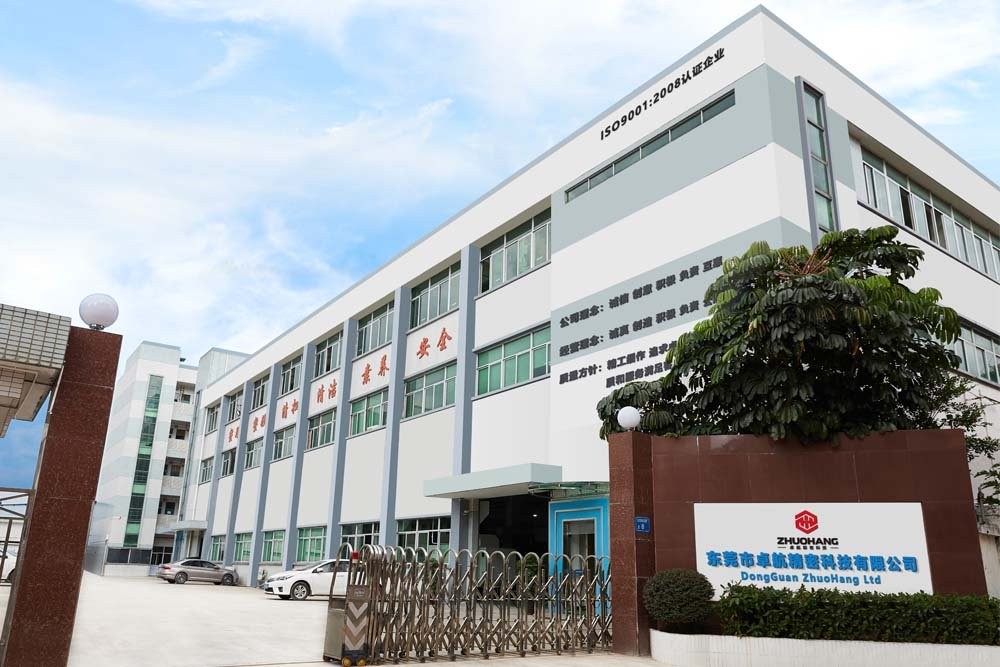
Ask for capability evidence and the answer should be specific. The facility behind this guide runs 100+ CNC machines on a 6,800 m2 floor in Dongguan, China, with 100+ staff. The machine list, by category:
- 5-axis machining centres (10+) - Mazak VARIAXIS I-600 (510/910/510 mm travel, 12,000 rpm, 22 kW, 71.6 N·m, 30-tool BT40) and Mazak INTEGREX I-250H S (B-axis 0.0001°, 24 kW, 124 N·m, 38-tool HSK-A63). Set up for compound-angle parts, single-setup multi-face prismatic work, and aerospace fittings where datum transfer loss is unacceptable.
- 3-axis / 4-axis machining centres (50+) - Brother SPEEDIO S500Z2N / S700Z2N (10,000 rpm, 14/21-tool ATC, 0.7 s tool-to-tool, Z-axis 2.2 G) and Mazak VCE-430A L / VCE-570C L (10,000 rpm, 118 N·m, 24-tool ATC). Set up for prismatic parts, plates, brackets, housings.
- Swiss-type turning centres (10+) - Citizen Cincom A20-3F7 (Φ20 mm, 10,000 rpm), TSUGAMI B0206-III / B0205-III (Φ20 mm, 0.1 µm), STAR SR-32JII / SR-32J Type N (Φ32 mm, 8,000 rpm). Set up for long, slender rotational parts at ±0.002 mm.
- CNC turning centres (20+) - HEADMAN T70M/1250 (720 mm swing, 117 mm bore, 3,000 rpm, BMT75 12-station turret). Set up for shafts, bushings, flanges up to ±0.002 mm.
- Wire EDM (5+) - Sodick AQ535L (550/350/300 mm travel, ±20° taper, 800 kg workpiece). Set up for hardened tool steel, internal splines, sharp internal corners that milling cannot reach.
- Inspection: Hexagon CMM + 20+ gauges - Hexagon CMM for coordinate measurement, plus vision system, profilometer, hardness tester, coating thickness gauge, XRF for material verification. The 10:1 rule (gauge 10x more accurate than the band) is applied to every feature.
- Machine highlights - VARIAXIS I-600: one-setup multi-face 5-axis + MAZA-CHECK auto-calibration; INTEGREX I-250H S: DONE-IN-ONE mill-turn, B-axis 0.0001° + Ai thermal shield; SPEEDIO S500Z2N / S700Z2N: Z-axis 2.2 G + 0.7 s ATC; Swiss-type: guide-bush switchable + 0.1 µm resolution.
Tolerances held: milling ±0.003 mm, turning ±0.002 mm, grinding and wire EDM ±0.002 mm. Capability: Ppk >= 1.67 initial and Cpk >= 1.33 in production on key characteristics.
Certifications: ISO 9001:2015 (116024/A/0001/UK/En), IATF 16949:2016 (131941/A/0001/SM/En, clause 8.3 design excluded, disclosed openly) and ISO 14001:2015 (116024/B/0001/UK/En), issued to Dongguan Zhuohang Ltd, USCC 91441900MA4UWT6X39, established 2005.
Service area: Austria, Belgium, the Czech Republic, Denmark, France, Germany, Greece, Hungary, Ireland, Italy, the Netherlands, Spain, Sweden and the United Kingdom in Europe; Brazil, Canada, Mexico and the United States in the Americas; China, Israel, Japan, Singapore and Sri Lanka in Asia; Australia and New Zealand in Oceania; and South Africa in Africa — built in China, shipped worldwide.
Contact: Felipe Iglesias, [email protected], +86 13126536955.
Match your alloy to the right process
Send your drawing to [email protected] or call +86 13126536955 for a material-process review.
Frequently Asked Questions
How does this manufacturer match material to process?
In short, By running the material against the process that fits it: milling for prismatic parts, turning for round parts, mill-turn for mixed geometry, and grinding for the final ±0.002 mm finish. The material's machinability drives feeds, speeds, and insert choice.
Which materials can this manufacturer machine?
Aluminum, stainless steel, carbon and alloy steel, brass, copper, titanium, and magnesium, plus engineering plastics including ABS, POM, nylon, and PEEK. Every incoming lot is XRF-checked against its mill certificate.
What tolerances can the manufacturer hold?
In short, ±0.003 mm on CNC milling, ±0.002 mm on CNC turning, and ±0.002 mm for precision grinding. Critical dimensions are verified on Hexagon CMMs, with process capability Ppk ≥ 1.67 at the initial study on key characteristics and Cpk ≥ 1.33 on general characteristics.
How does titanium differ in the process match?
Titanium conducts heat poorly and springs back after cutting, so it needs rigid machines, sharp tools, and slower feeds. Stress relief above 500 °C is outsourced because the in-house ovens cap at 500 °C.
What is the minimum order quantity?
The MOQ is 1 piece, so you can prototype and validate a material choice before committing to volume. Lead times run roughly 3, 7, or 30 days depending on complexity and process steps.
How does material choice affect lead time?
Free-machining materials run fast and ship in the shorter 3 or 7-day tiers. Demanding alloys and any surface finishing push a part toward the 30-day tier, so the material choice is also a schedule choice.
Continue reading: Swiss Turned Parts Factory · Swiss Turned Parts Services · Swiss Turned Parts Quality Control
Standards referenced on this page
- ASTM A582/A582M-12 — Standard Specification for Free-Machining Stainless Steel Bars
- ASTM A276/A276M-17 — Standard Specification for Stainless Steel Bars and Shapes
- ISO 9001 — Quality management systems — Requirements